ABOUT THE SCHOOL

Bring the pieces together.

“Education is not the accumulation of knowledge. It is what happens when knowledge begins to change the way we live.”

MISSION

A human life does not happen
in departments.

Most education separates what life asks us to use together.

You learned biology in one room, feelings in another (if you were lucky), and relationships nowhere. Then you were expected to run a life with all of it at once. No wonder it's messy.

SILS puts medicine, psychology, movement, nature, nutrition and relationships back in the same room. We won't tell you who to become, and we won't promise you a perfect life. Nobody honest can. What we offer is harder and more useful: practice, with other people, until what you know starts to show up in how you live.

THE CORE DISTINCTION

Freedom Over, or Freedom With?

What does it actually mean to be free?

We tend to imagine freedom as independence. Nobody telling us what to do. Nobody making demands. Nobody interfering with our plans, questioning our decisions, or expecting something we would rather not give.

Sounds wonderful. Until we remember that other people exist.

And that we want them in our lives.

The trouble begins when we confuse freedom with the absence of obligation, or independence with the absence of attachment. We want intimacy, but not inconvenience. We want to be understood, but not necessarily challenged. We want love, but sometimes become irritated when the person loving us turns out to have needs of their own.

So perhaps the more interesting question is not How do I become free of other people? but How do I remain free while being involved with them?

At SILS, we explore two fundamentally different ways of understanding freedom.

Freedom Over

I am free when nobody has power over me.

Here, freedom is measured by distance and control. The fewer demands others can make, the safer we feel. Depending on someone becomes a liability. Compromise feels suspiciously like surrender. Disagreement becomes a contest in which somebody must win.

And when another person's needs interrupt our carefully constructed independence, we may experience those needs not as part of a relationship, but as an intrusion.

There is something seductive about this position. It promises protection from disappointment, rejection, humiliation, and the uncomfortable discovery that we cannot control everything.

But protection comes at a price.

If nobody can influence us, nobody can truly reach us. If we must always remain in control, we lose the possibility of being surprised, challenged, or changed.

We may succeed in keeping others from having power over us while quietly giving fear enormous power over our lives.

We have protected our independence. But what have we done with our freedom?

Freedom With

I am free even when another person matters to me.

This is a more demanding kind of freedom.

It means being able to love without possessing, depend without becoming helpless, disagree without humiliating, and compromise without disappearing.

It means recognizing that another person's wishes are neither commands we must obey nor threats we must defeat.

Your partner can be disappointed without your having failed. Your child can disagree without being disrespectful. A friend can say no without rejecting you. Someone can love you deeply and still want something different from what you want.

And you can tolerate all of this without needing to punish, withdraw, dominate, or surrender.

Freedom With requires something more sophisticated than independence: the capacity to remain psychologically distinct while emotionally connected.

It asks us to tolerate frustration, uncertainty, vulnerability, and the unsettling reality that people we love are separate human beings.

They are not extensions of us. They are not responsible for regulating every uncomfortable feeling we experience. And they are not obstacles to our freedom simply because they have freedom of their own.

This does not mean tolerating mistreatment or remaining in relationships at any cost. Sometimes freedom requires leaving. The difference is whether leaving is a deliberate choice or the only way we know to manage discomfort.

Freedom Over asks: How do I stop others from affecting me?

Freedom With asks: How do I allow others to matter without losing myself?

The first seeks safety through distance. The second develops freedom through the capacity to remain connected.

And perhaps that is one of adulthood's most difficult achievements: discovering that we do not have to choose between belonging to ourselves and belonging with others.

VISION

Measured in Chapters, Not Weekends

You've had the experience. A conversation that rearranged something in you. A weekend where you saw yourself clearly for the first time in years. A sentence from a stranger you still remember.

Then Monday came.

Here's what nobody selling transformation likes to say out loud: insight is cheap. Not worthless. Cheap. It arrives in a moment, it feels wonderful, and on its own it changes very little. Living differently is a separate skill, and it takes much longer to learn.

SILS is interested in both: the moment, and Monday.

Your Life, Your Chapters

Your life does not follow a curriculum. It never did.

Relationships change. Careers go sideways. Your body ages whether you approve or not. What consumed you at 25 may look almost quaint at 45. And the question you were sure you'd settled? It comes back in different clothes, demanding a different answer.

We call these periods Chapters.

A Chapter is not a course. It is not a membership contract. It is not a fixed number of years. It is a framework for working on the questions that matter, over time, through learning, movement, relationships, practical experience, and reflection.

You can start anywhere. You can take part as much or as little as you like. We offer the opportunities. What you do with them is yours.

Development Has No Graduation Date

Nobody expects a violinist to be finished after a weekend. Nobody expects an athlete to peak after one good session, or a doctor to stop learning the day she gets her license.

Yet when it comes to understanding ourselves, our relationships, and our decisions, we expect transformation by Sunday afternoon.

There is no certificate for being human. Nobody graduates.

You will meet old problems in new circumstances. You'll find strengths you didn't know you had, and vulnerabilities you hoped you'd outgrown. Sometimes you'll make progress. Sometimes you'll repeat the same mistake with remarkable creativity. That isn't failure. That's what development looks like up close.

You are not trying to become a finished product. You are trying to get better at understanding, questioning, choosing, and showing up for your own life.

The years are going to pass anyway. The only question is what you learn while you're living them.
PHILOSOPHY

Four principles that guide everything
we do

01

The body is never separate

You do not leave your body behind when you think. Physical state, emotion, attention, stress and behaviour continuously affect one another. At SILS, ideas therefore have to meet real experience.

02

Experience before abstraction

A concept becomes more interesting when life disagrees with it. SILS uses movement, dialogue, observation, history, art, nature and unfamiliar situations to test what we think we understand.

03

Development takes time

Insight can happen quickly. Integration usually does not. SILS creates opportunities to return to important questions repeatedly, allowing understanding to deepen as experience changes.

04

Freedom with, not freedom over

Strength does not require distance from everyone around you. We explore how to remain independent while still participating fully in relationships, communities and shared life - to disagree without disappearing, compromise without surrendering yourself, and be free while still belonging.

BUILDING SILS

A school
still becoming.

Every institution exists twice: first as an idea, then because somebody begins building it.

SILS is still becoming. Every event is a chance to learn. Every lecture can become the beginning of a tradition. Every Mental Accelerator, dinner, walk and conversation teaches us something about what this School can become.

We observe, experiment, refine and build again. We are not interested in pretending SILS is finished. We are interested in building something worth continuing. The people who enter now are not simply arriving at an institution. They are entering while its culture is still being created.

FOUNDER

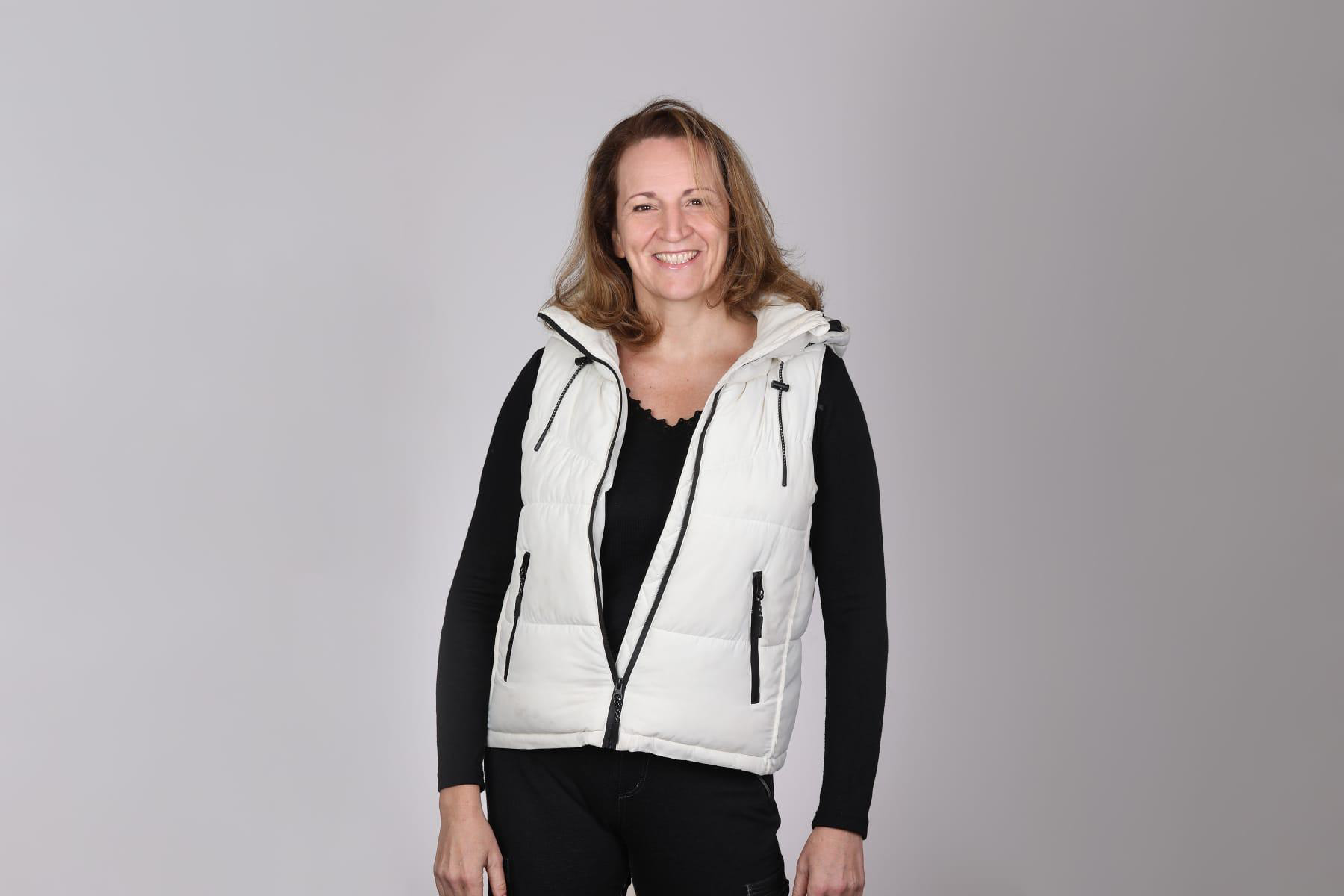
Dr. Med. Denisa Legac

Dr. Med. Denisa Legac
Founder, School of Integrated Life Sciences
“I did not learn this only in a seminar room. I learned it over more than twenty years of sitting across from people and watching the same human questions appear in completely different lives.”

Dr. Med. Denisa Legac has spent more than twenty years working across medicine, psychology, relationships, performance and personal development.

Across physicians, executives, athletes, couples and entrepreneurs, one observation kept returning: being capable in one part of life does not automatically make us capable in another. A person may stay calm under enormous professional pressure and feel completely overwhelmed inside a relationship. We may understand exactly why we behave a certain way and still repeat it. We may know what supports our health and still struggle to live accordingly.

SILS grew from that distance between knowing and living. The School therefore approaches education through both explanation and experience - through conversation, movement, relationships, challenge and the environments in which real life actually happens.

Where science meets experience.
Where movement becomes understanding.
Where the world becomes the classroom.

Find your first event

Explore upcoming Mental Accelerators, lectures, workshops, dinners, walks and immersive experiences.

Browse events